
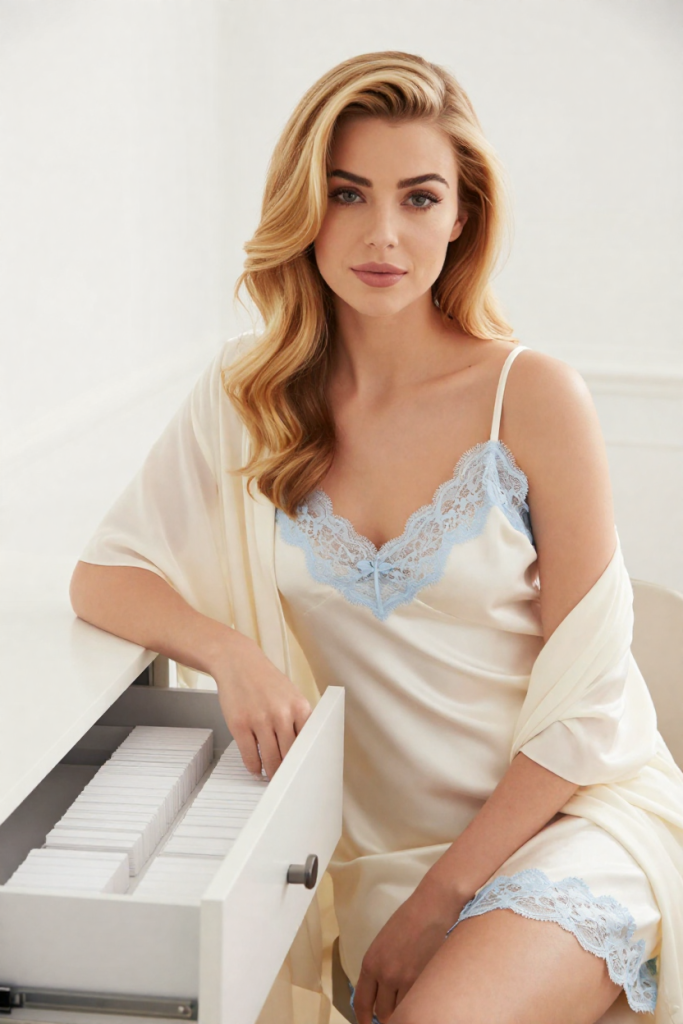
The cabinet’s name invites a misunderstanding the studio corrects on sight: nothing is stored here for the public, no data is kept on anyone’s behalf, and the drawers hold no information about the world. They hold stories — five-line descriptions of fictional women, written by the studio that invented them, kept so the inventions stay consistent.
That narrowness is deliberate and protective. Because the cabinet keeps only character cards, it can keep them exactly: one drawer per character, one card per drawer, no second version quietly diverging in another folder. Blends and duplicates are how series acquire relatives they never commissioned.
Everything else a maker produces rests where it belongs: private in the maker’s own account, published only by the maker’s own hand. The cabinet is furniture and method — a place to keep a written decision, not a service that keeps anything of yours.
Nothing stored but stories, and the stories are the studio’s own. The drawers stay blank-labelled, the cards stay exact, and the work stays hers.